



Table of Contents

Key Takeaways
- During periods of economic conditions uncertainty, customers change not only how they spend but also how they pay. Businesses need to understand these shifts in payment behaviors to stay relevant.
- Payment friction can cause customers to abandon transactions even if they still intend to complete a purchase.
- A multi-payment strategy with various payment methods helps businesses improve conversion rates, customer retention, and customer experience.
When the economy becomes uncertain, consumer behavior shifts beyond spending habits, it also changes how they prefer to pay.
In Indonesia, digital payment continues to grow rapidly. QRIS, e-wallets, virtual accounts, and other digital payment methods are now widely used across various industries. At the same time, cash remains an important payment option, particularly outside major urban areas.
This condition shows that digital transformation does not necessarily mean customers will abandon the payment methods they have long used.
For businesses, understanding changes in customer payment preferences is increasingly important, as they can directly affect transaction success rates, customer retention, and cash flow.
Digital Payments Are Growing, But Cash Has not Disappeared
In recent years, digital payment adoption in Indonesia has accelerated significantly. Customers can now make payments through a wide range of channels, from mobile banking and QRIS to e-wallets and credit cards.
However, cash continues to play a significant role in everyday transactions. Many consumers, particularly those living in suburban and semi-urban areas still rely on convenience stores, payment agents, or cash to complete their payments.
This shows that payment transformation is not always linear. While customers appreciate the convenience of digital payments, they also continue to value payment options that align with their financial situations and everyday habits.
As a result, businesses cannot rely on a single payment method or assume that every customer shares the same payment preference.
Why Do Customers Return to Familiar Payment Methods During Economic Uncertainty?

One common pattern during uncertain economic conditions is that customers tend to return to payment channels they already know and trust.
When purchasing power is under pressure or personal finances become tighter, customers typically reduce risk and choose the payment methods they consider the most convenient.
For example:
- Customers who previously used various digital payment methods frequently may switch to paying via convenience stores because it gives them better control over their spending.
- The same pattern appears in the insurance and multifinance sectors. Many customers make payments only when they have sufficient funds available, rather than strictly following scheduled payment dates. In these situations, they are more likely to choose whichever payment channel is the most accessible at that moment.
These behavioral shifts often go unnoticed when businesses focus solely on transaction numbers. However, understanding why customers choose certain payment methods enables companies optimize both their collection strategies and customer experience.
Read more: The Role of Government-to-Government in the Development of QRIS
Payment Friction: A Hidden Causes of Customer Loss
Many businesses assume that customers who fail to complete a payment have decided not to purchase or renew their services.
In reality, that's not always the case.
In many cases, customers still intend to complete the transaction but encounter obstacles during the payment process.
Common examples of payment friction include:
- Limited payment options
- Lengthy checkout process
- The customer's preferred payment method is unavailable
- Delayed payment confirmation
- Issues with recurring payments
In the insurance industry, for example, unsuccessful premiums payment during policy renewal can result in policy lapse. The issue is often not that customers no longer need insurance protection, but that the payment process failed.
Similar situations can also occur in subscription-based businesses, multi-finance companies, and other digital services.
Rather than viewing failed payments simply as lost transactions, businesses should recognize them as indicators of friction within the customer journey.
Is a Multi-Payment Strategy Becoming More Important?

As customer behavior evolves, businesses need to provide a more flexible payment experience.
This is why a multi-channel payment approach is increasingly relevant.
A multi-payment strategy allows customers to choose whichever payment method best fits their needs, both online and offline.
According to Chris Yeo (CEO of DOKU), there are two key factors in creating a frictionless payment experience: offering payment methods that match customer preferences and leveraging technology that improves transaction success rates, particularly for recurring payments.
As Chris Yeo explains:
"Offering a wide variety of payment methods according to what your customers want."
This is especially relevant because payment preferences vary widely. Some customers prefer QRIS or e-wallets, while others rely on Virtual Accounts, credit cards, or even over the counter (convenience store).
By offering a variety of payment options, businesses can serve a broader customer base without requiring customers to change payment habits they already trust.
It also increases payment success rates as customers can easily switch to another payment channel if their preferred method is temporarily unavailable.
Payment Flexibility is a Key of Customer Experience
Many businesses focus on driving traffic and increasing sales but overlook the fact that customers can still drop off at the payment stage. That is why payment experience should become an integral part of every customer retention strategy.
One effective approach is to provide multiple payment methods that customers can access across every sales channel. Whether customers shop through a website, app, social media, or chat platform, they should be able to complete payments easily using their preferred method.
Through a payment gateway integration, businesses can offer a wide range of payment options within a single system, including QRIS, Virtual Accounts, credit cards, e-wallets, and over the counter.
The easier it is for customers to pay, the more likely they are to complete their purchases and return for future transactions.
Read more: Subscription Business Model: A Smart Way to Keep Customers Coming Back
Know Your Customers, Match Their Payment Preferences
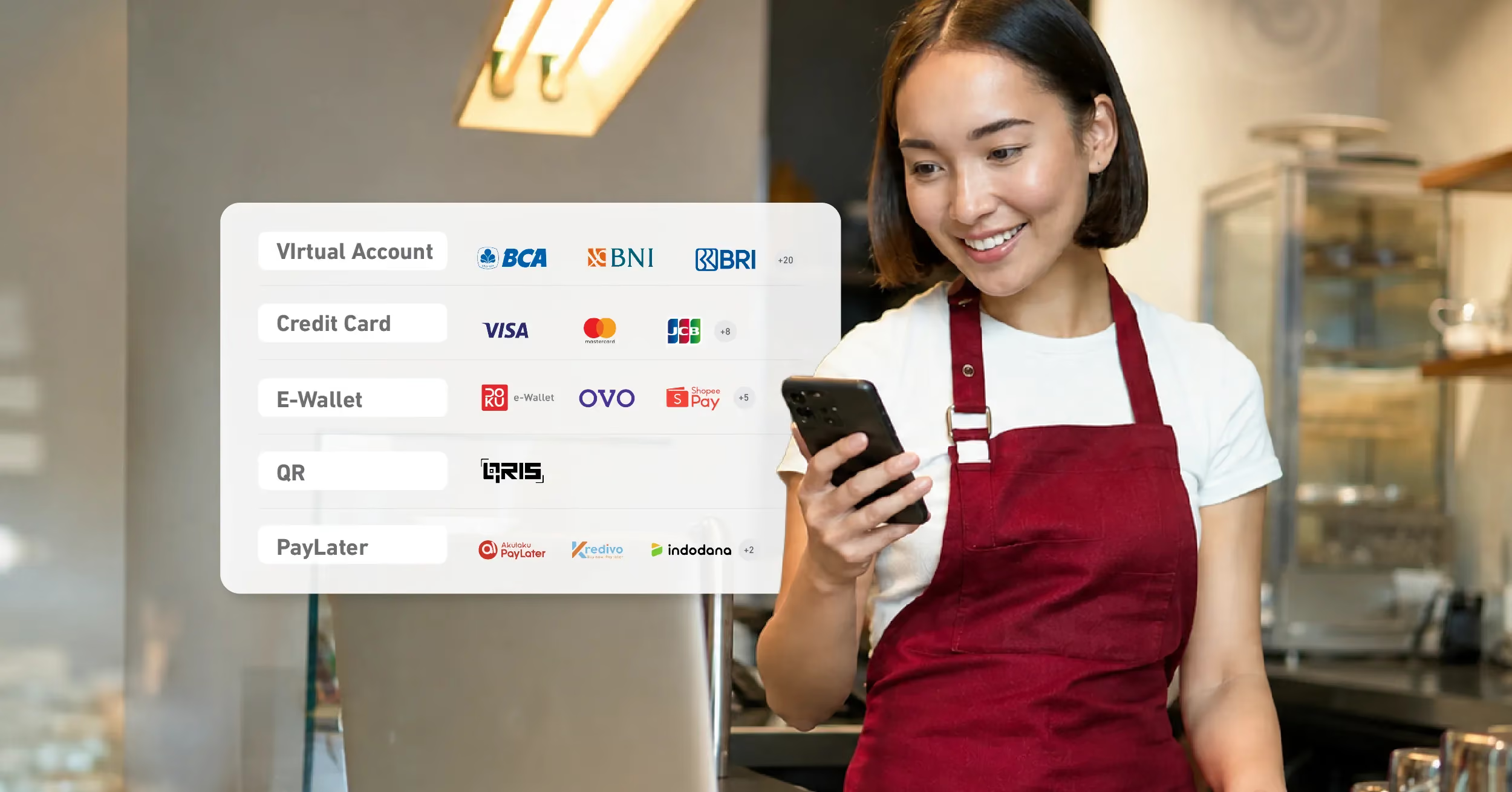
This is why businesses need to ensure that their payment systems can accommodate diverse customer preferences.
In Indonesia, not all customers have the same payment habits. Some prefer QRIS, others rely on Virtual Accounts for bank transfers, while many still choose e-wallets or cash payments through convenience stores or specific e-wallet.
To help businesses reach more customers, DOKU provides more than 45 payment methods through a single payment gateway integration. These include QRIS, Virtual Accounts from multiple banks, credit and debit cards, e-wallets, and retail outlet payments all accessible through one integration.
By offering more payment options, businesses can create a more flexible checkout experience tailored to customer preferences. This not only improves transaction success rates but also reduces the risk of customers abandoning the payment process because their preferred payment method is unavailable.
As consumer behavior continues to evolve, the ability to provide a payment experience that is simple, flexible, and relevant can become a key competitive advantage.


