



Table of Contents

Key Takeaways
- As we celebrate Bank Indonesia Day on July 5th, it is a moment to appreciate the journey of building Indonesia’s national payment system, as a foundation for the country’s digital economic growth.
- The convenience of making payments with QRIS, BI-FAST, and other digital payment methods is the result of strong collaboration between Bank Indonesia, banks, infrastructure providers, and payment gateways.
- A payment gateway helps businesses connect with multiple banks and payment methods through a single integration. This helps streamline operations while giving customers a faster, safer, and more seamless payment experience.
Bank Indonesia Day, commemorated every July 5th, reminds us of the long journey towards building Indonesia’s financial and national payment systems. Many of the payment innovations we rely on today, from QRIS and BI-FAST to Virtual Accounts, are the result of foundations
But have you ever wondered what actually happens in the few seconds after a customer clicks “Pay”?
Whether a customer scans a QRIS code at checkout, makes a transfer through BI-FAST, or completes a payment using a Virtual Account, the transaction may appear simple. Behind that seamless experience, however, is a connected ecosystem involving multiple parties working together.
From Bank Indonesia as the regulator, to banks, payment infrastructure providers, and payment gateways, each plays an important role in ensuring every transaction is processed securely, quickly, and reliably. This collaboration has become the foundation for the growth of Indonesia’s digital payment ecosystem that we rely on today.
From Separate Systems to a Connected Ecosystem
A few years ago, payment integration was a major challenge for many businesses. Each bank and payment service provider operated on different systems, often requiring businesses to integrate with each provider separately in order to to accept various payment methods.
Today, this landscape has changed significantly with the development of national payment infrastructures that promote interoperability across the industry.
Several key innovations have played a major role in this transformation, include:
- QRIS (Quick Response Code Indonesian Standard)
Brings multiple payment QR codes under a single national standard. With QRIS, merchants only need to provide one QRIS code, while customers can make payment using any QR supported payment app. - BI-FAST
Enables real-time interbank money transfers at a more affordable cost. This makes transfers faster and supports businesses’ day-to-day transaction needs. - SNAP (National Open API Payment Standard)
provides standardized APIs that makes it easier for banks, fintech companies, and payment service providers to connect with one another. By using a common standard, allowing payment innovations to develop more quickly.
The emergence of these various infrastructures shows that the development of the payment system does not depend on technology alone, but also on collaboration. When regulators, banks, fintechs, and payment providers use the same standards and can connect with one another, businesses find it easier to provide a fast, safe, and convenient payment experience for their customers.
Collaboration as the Key to Payment System Innovation

The digital payment ecosystem we rely on today wasn’t built by a single organization. Every fast, secure, and seamless transaction is made possible through the collaboration of multiple players working together across the payment ecosystem.
Each stakeholder plays a complementary role:
- Bank Indonesia: Establishes policies, regulations, and national payment standards to ensure that the ecosystem operates securely and in an integrated manner.
- Banks: Provide financial services and the infrastructure that enables funds to move securely between accounts.
- Payment technology companies, including payment gateways: provide solutions that connect businesses with various banking services and payment methods.
This collaboration enables consumers to enjoy more convenient payment experiences. At the same time, businesses can accept payments through multiple methods without having to build and manage complex systems on their own.
For businesses, the benefits go beyond operational convenience. The easier it is for customers to complete a payment, the greater the opportunity for transactions to be successfully completed, improving conversion rates and overall customer experience.
The Role of Payment Gateways In Connecting Businesses with Bank
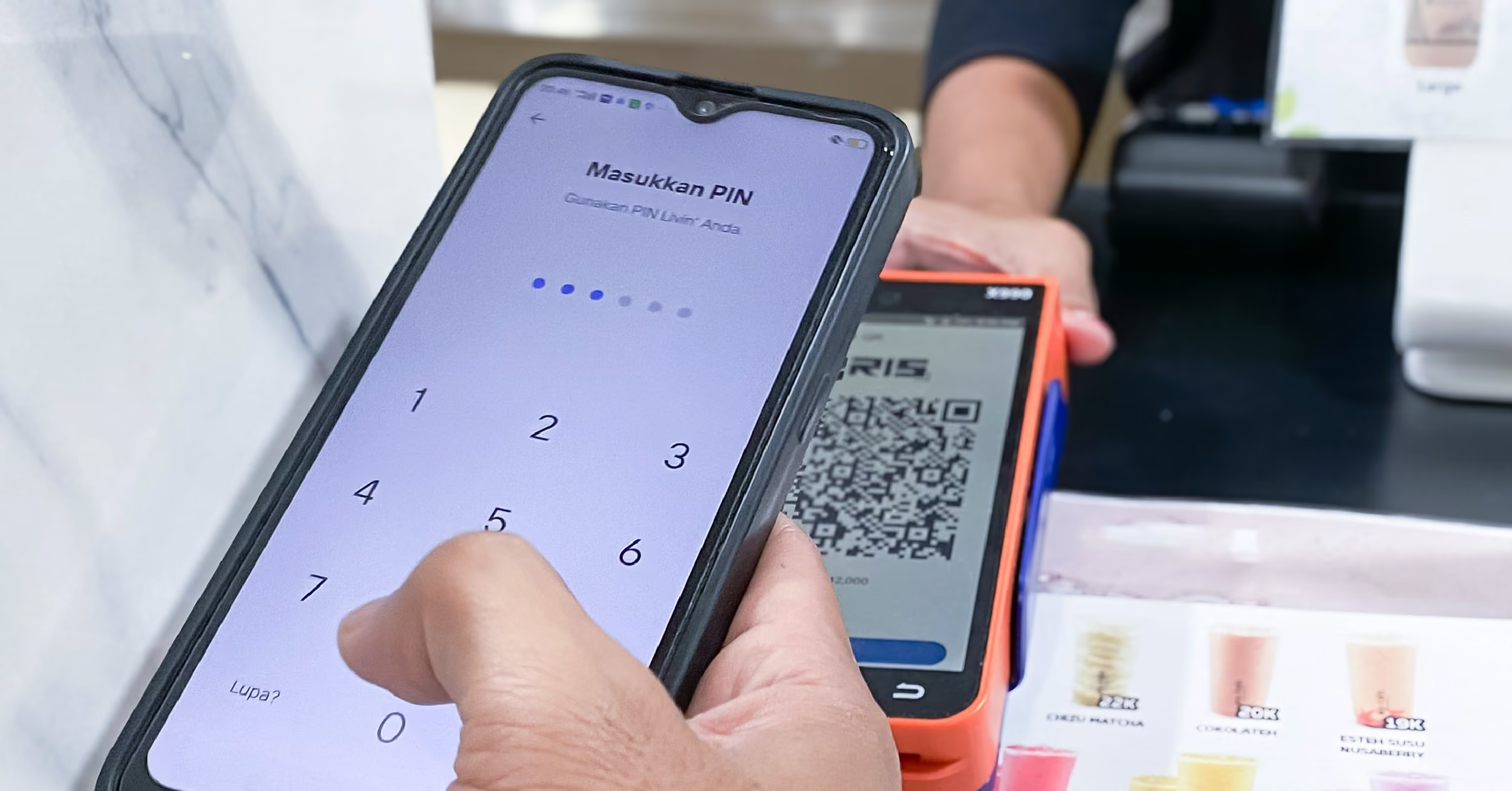
Although customers may only see a payment process that takes a few seconds, multiple interconnected systems are working together behind the scenes.
This is where payment gateways like DOKU serve as a bridge between . businesses, banks, and multiple payment methods. Through a single integration, businesses can accept payments via:
- Virtual Accounts
- QRIS
- Credit and Debit Cards
- E-wallets
- PayLater
- Over-the-Counter payments (at convenience stores)
With this approach, businesses no longer need to integrate separately with individual banks or payment providers. In addition to improving efficiency, it simplifies operations, by allowing businesses to manage their payment processes through a single platform.
The role of payment gateways continues to expand alongside evolving business needs. Beyond processing transactions, payment gateways help businesses deliver payment experiences that are faster, more secure, and better connected.
DOKU Supports Indonesia's Collaborative Payment Ecosystem
As a payment fintech company and a pioneer of Indonesia’s payment gateways, DOKU believes that meaningful progress in the payment industry is built on strong collaboration across the ecosystem.
That's why DOKU continues to work with banking partners and payment service providers to deliver payment solutions that are secure, reliable, and easy for businesses to integrate. Through a single platform, businesses can access multiple payment methods without having to manage separate integrations with each bank or provider. This streamlined approach simplifies payment operations while creating a smoother experience for customers.
80 Years of Building the Foundation of the Payment Ecosystem
Observed every July 5, Bank Indonesia Day traces its roots back to the establishment of Bank Negara Indonesia (BNI) on July 5, 1946, as the Republic of Indonesia's first circulation bank. This milestone continued with the establishment of Bank Indonesia as the country’s central bank, which has since played a key role in driving innovation and maintaining the stability of Indonesia’s national payment system.
Nearly eight decades later, that journey has evolved into a modern, interconnected digital payment ecosystem. Bank Indonesia Day is also an opportunity to appreciate all the parties that have contributed to building and advancing this ecosystem.
As part of Indonesia's payment ecosystem, DOKU will continue to collaborate with banking partners and industry players to deliver secure, reliable, and easy-to-integrate payment solutions, enabling more businesses to grow alongside Indonesia's digital economy.


