


Table of Contents

Key Takeaways
- QRIS, initially used domestically, is evolving into a cross-border payment system, supporting the global shift toward cashless digital payments.
- Government-to-government (G2G) collaboration enables international travelers to make payments more conveniently by simply scanning a QR code.
- Cross-border QRIS creates new opportunities for businesses to enhance customer experience and reach regional markets through more seamless digital transactions.
When people think about digital payments, they often associate them with technological innovation, e-wallets, or the growing adoption of cashless transactions. However, another key trend is playing an increasingly important role in shaping the future of digital payments: government-to-government (G2G) collaboration.
Through cooperation between governments, regulators, and central banks, payment systems that once operated only within national borders are becoming interconnected across countries. The goal is not only to simplify cross-border transactions but also to build a more integrated digital economy.
In Indonesia, this trend is becoming increasingly visible through the development of QRIS Cross-Border. Although still relatively new, this initiative demonstrates how inter-country collaboration can drive payment system interoperability and unlock new opportunities for both individuals and businesses. In other words, digital payments are no longer driven solely by technology, they have also become a part of broader regional economic cooperation strategy.
Payment Connectivity Is Not Just an Indonesian Trend, It's a Global Movement

Across the world, countries and regions are building more connected payment ecosystems to support increasing cross-border mobility and the growth of the digital economy.
Here are a few examples of how government-to-government (G2G) collaboration is driving the evolution of digital payments around the world:
- India–Singapore Collaboration
In 2023, India and Singapore officially linked their digital payment systems, UPI (Unified Payments Interface) and PayNow. This connectivity enables real-time cross-border fund transfers at lower costs. The initiative was made possible through collaboration between the Reserve Bank of India (RBI) and the Monetary Authority of Singapore (MAS) to facilitate more efficient and integrated cross-border payments.
- Payment Interoperability in Europe
In Europe, payment interoperability has long been established through the Single Euro Payments Area (SEPA). SEPA creates a unified standard allowing bank transfers and electronic payments across participating countries to be processed as easily as domestic transactions. This initiative is supported by national governments, the European Commission, and the European Central Bank as part of broader efforts to build a fully integrated European payments market.
These initiatives illustrate that cross-border payment connectivity is increasingly recognized as a critical foundation of today's digital economy. For businesses, this signals that regionally connected payment systems are likely to play an even greater role in the future.
QRIS, One of Indonesia's Key Examples of G2G Collaboration

In Indonesia, one of the notable examples of government-to-government (G2G) collaboration in the payments industry is the development of QRIS Cross-Border.
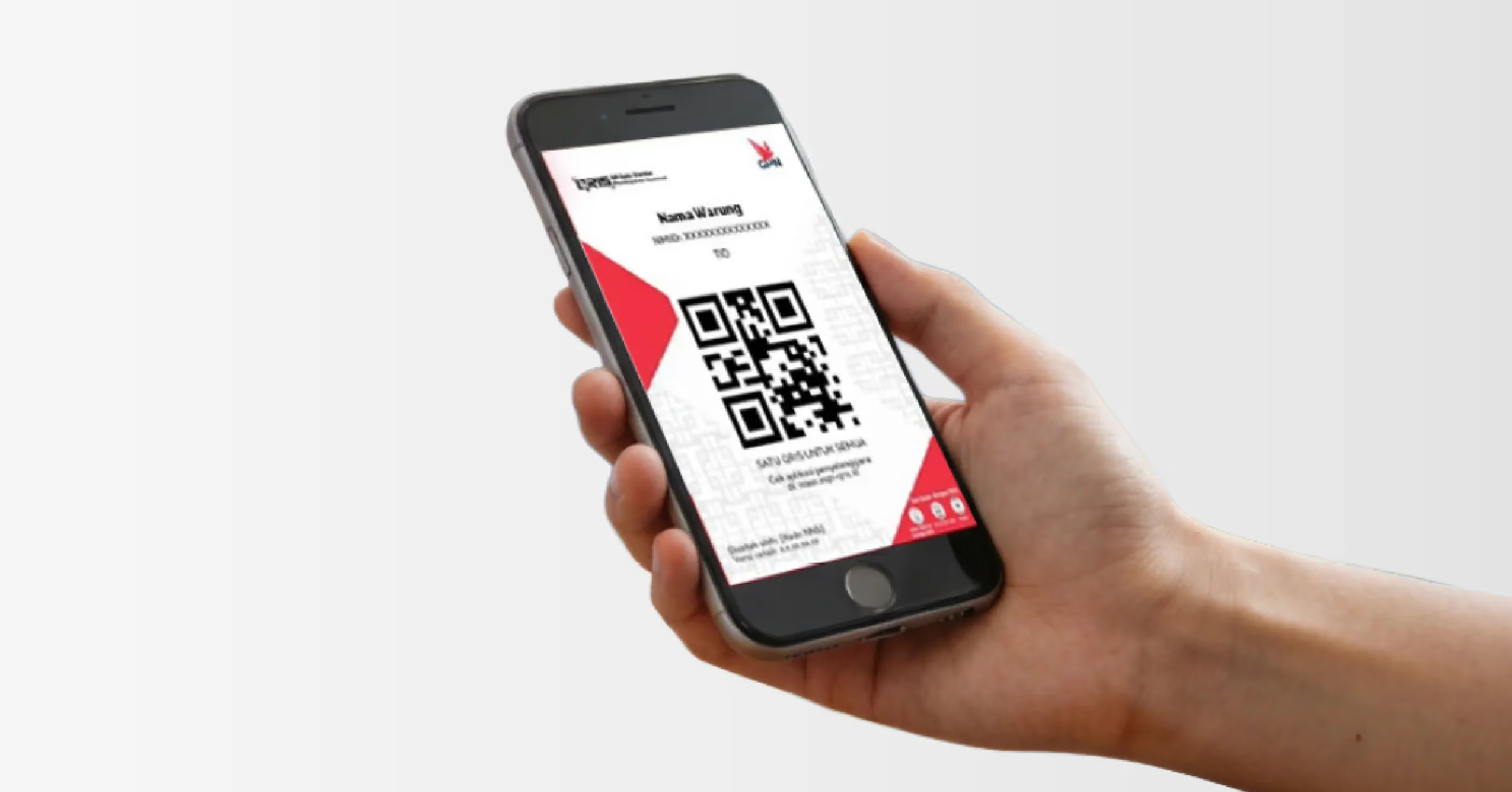
Originally, QRIS was introduced as Indonesia's national QR code standard, unifying multiple digital payment methods into a single system. As cross-border payment needs continued to grow, collaboration among regulators paved the way for QRIS to connect with payment systems in other countries.
The journey began in 2021 with a pilot project between Bank Indonesia and the Bank of Thailand. Following successful trials, the full implementation of cross-border QRIS between Indonesia and Thailand was officially launched in August 2022, marking Indonesia's first international QR payment connectivity.
Since then, QRIS Cross-Border has continued to expand. Following Thailand, Indonesia established payment connectivity with Malaysia and Singapore, followed by Japan and South Korea. By 2026, the initiative had expanded further, with China becoming one of the latest partners in developing cross-border payment connectivity.
These developments illustrate how collaboration between governments, regulators, and central banks can transform QRIS from a domestic payment system into a key part of regional digital economic connectivity.
This perspective was also shared by Alison Jap, a member of the AFTECH Ethics Council, during an interview on CNBC's Tech a Look program:
"From what I can see, we should be very grateful because Bank Indonesia is incredibly forward-looking and innovative. They recognize that QRIS isn't just for domestic use, they are actively pursuing government-to-government relations to expand QRIS's acceptance across more and more countries. So I believe the role of the regulator is crucial, and equally so is the role of industry players."
This statement underscores that the growth of cross-border QRIS is the product of synergy between regulators and industry stakeholders, all working together to build a more connected payments ecosystem.
Why Does This Trend Matter for Businesses?
.avif)
While cross-border payments implementation is still evolving, the direction of the industry is becoming increasingly clear.
Consumers have grown accustomed to payment experiences that are fast, seamless, and digital. At the same time, cross-border travel and commerce continue to increase alongside the growth of tourism and the digital economy.
As a result, payment convenience has become an important factor influencing the overall customer experience.
For businesses, understanding this trend can help unlock opportunities to:
- Enhance the customer experience.
- Serve international customers more conveniently.
- Keep pace with the growth of the regional digital economy.
- Prepare for future changes in payment behavior.
Looking ahead, a business's ability to deliver a seamless payment experience may become a key competitive advantage. Cross-border QRIS is therefore more than just another payment method, it represents an opportunity for businesses to become more digitally connected and better positioned in an increasingly integrated regional economy.


