



Table of Contents

Key Takeaways
- Sustainability can start from simple actions. Going paperless, managing waste responsibly, and saving energy are already impactful starting points for any business.
- Sustainable practices help businesses become more efficient, build customer trust, and stay relevant to today’s market demands.
- Consistency is the key. Small habits practiced collectively by the entire team can create long-term impact and build a more sustainable business.
Many businesses want to start implementing sustainability, but often stop at one assumption: “it’s too complicated and expensive.” In reality, that is not always the case.
Today, sustainability is no longer just a trend, it has become an expectation. Consumers are becoming more environmentally conscious, and business partners are increasingly selective about who they choose to work with. Sooner or later, every business will face this shift.
Unfortunately, many business owners still believe sustainability requires major transformation or complex programs from the beginning. In fact, the first steps can be much simpler and more practical.
In this article, we will explore practical and realistic examples of sustainability that businesses can start implementing right away.
Why Is Sustainability Important for Businesses?
Before exploring practical examples, it is important to understand that sustainability is not only about protecting the environment, but also about ensuring long-term business growth.
Here are some direct benefits businesses can gain include:
- Building stronger brand trust and customer loyalty, as consumers increasingly prefer environmentally responsible brands
- Improving long-term operational efficiency, since many sustainability practices actually help reduce costs
- Meeting ESG (Environmental, Social, and Governance) standards, which are becoming more important for attracting investors and strategic partners
In other words, sustainability is a strategic investment, not merely an additional expense.
7 Sustainability Examples You Can Start Applying to Your Business Today
After understanding why sustainability matters, here are several practical sustainability examples that businesses can start applying in daily operations.
1. Reduce Paper Usage

This is one of the simplest sustainability initiatives businesses can implement without significant costs.
Examples of implementation:
- Switching to digital invoices
- Using e-signatures for contracts and approvals
- Storing documents in cloud storage systems
Besides being more environmentally friendly, these steps also improve efficiency and speed up team workflows.
2. Manage Waste More Responsibly

Almost every business generates waste daily, especially from office and operational activities. Sustainability efforts in this area can start with very simple actions:
- Separating organic and non-organic waste
- Providing separate trash bins in work areas
- Educating employees about the importance of waste management
For businesses ready to go further, implementing a circular waste concept is a great next step, for example, composting organic waste, much like what DOKU does through its Green Pantry initiative.
Learn more about the DOKU Green Pantry initiative.
3. Reduce Single-Use Plastic

Single-use plastic remains one of the largest contributors to waste pollution. Here are some small but meaningful sustainability steps for the workplace:
- Replacing disposable plastic bottles with reusable tumblers
- Using eco-friendly packaging or reusable lunch containers
- Swap plastic bags for environmentally friendly tote bags
These efforts can also strengthen brand value among environmentally conscious consumers.
4. Optimize Energy Usage

Energy efficiency is a sustainability practice with immediate impact, not only for the environment but also for operational costs.
Businesses can start with simple habits such as:
- Turning off electronic devices when not in use
- Replacing conventional light bulb with energy-efficient LED lighting
- Optimizing air conditioner schedules and temperature settings
When practiced consistently across the organization, the long-term savings can be significant.
5. Build a Sustainability Culture Within the Team

Strong sustainability practices are not only driven by company policies, but also by company culture. Employee involvement is essential for long-term consistency.
Examples of internal sustainability initiatives:
- Running internal campaigns such as “No Plastic Day” or “Zero Waste Week”
- Providing regular environmental awareness sessions
- Making sustainability part of the company’s core values
The more employees involved, the greater the impact the business can create.
6. Choose More Responsible Partners and Vendors

Everyday business decisions can also reflect sustainability values, including how businesses choose suppliers and partners.
Consider working with:
- Vendors with environmentally responsible operational practices
- Local suppliers to reduce logistics-related carbon emissions
- Partners with clear ESG (Environmental, Social, Governance) commitments
This approach helps create a more sustainable business ecosystem overall.
7. Digitize Payments and Transactions

Switching to digital payments is a sustainability practice that is often overlooked, even though the impact is significant.
Benefits include:
- Reducing paper usage from printed receipts and manual records
- Creating more efficient and transparent operations
- Expanding market reach by accommodating customers’ preferred payment methods
Tips to Keep Sustainability Efforts Consistent
Getting started is important, but maintaining consistency is even more crucial. Here are several tips to help sustainability initiatives succeed:
- Start with the easiest initiatives instead of forcing major changes immediately
- Set small and realistic targets, such as reducing paper usage by 20% within three months
- Involve the entire team, because sustainability is a shared responsibility
- Measure progress regularly, since visible impact can motivate teams to stay committed
With a gradual approach, sustainability becomes less overwhelming and more naturally integrated into daily business operations.
Sustainability Starts from Simple Actions
Sustainability does not always require massive investments or large-scale transformation. In many cases, simple habits such as reducing paper usage, managing waste responsibly, or saving energy can become the strongest foundation for long-term impact.
For businesses, sustainability is not only about “doing good,” but also about “doing smart”: building operations that are more efficient, relevant, and future-ready.Ultimately, sustainable businesses are those that can continue to grow and adapt over time.
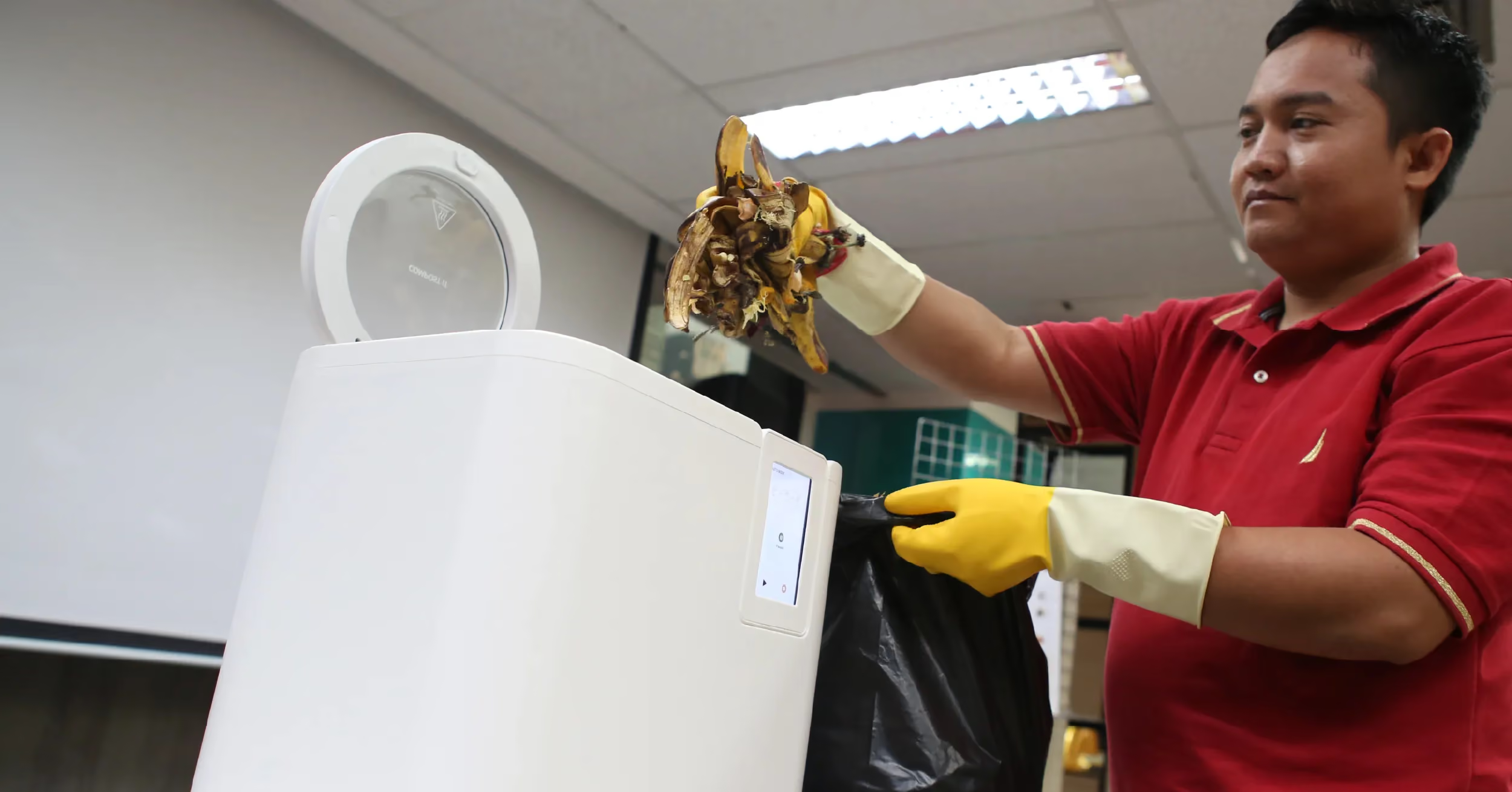
At DOKU, we believe meaningful change starts from small and consistent habits. That is why we introduced Green Pantry, an internal sustainability initiative where organic waste from our office pantry is separated and routinely processed into compost.
Simple, yet meaningful. Because for us, being a sustainable business is not only about the products and services we provide, but also about how we run our daily operations.


