


Table of Contents

Key Takeaways:
- Business opportunities for Chinese New Year 2026 increase due to its proximity to Ramadan and the formation of an interconnected consumption cycle.
- F&B & hampers, fashion & retail, travel & hospitality, and grocery & essentials are the sectors with the greatest growth potential.
- The key to successful Chinese New Year business opportunities lies in relevant strategies across moments and a practical and seamless payment experience.
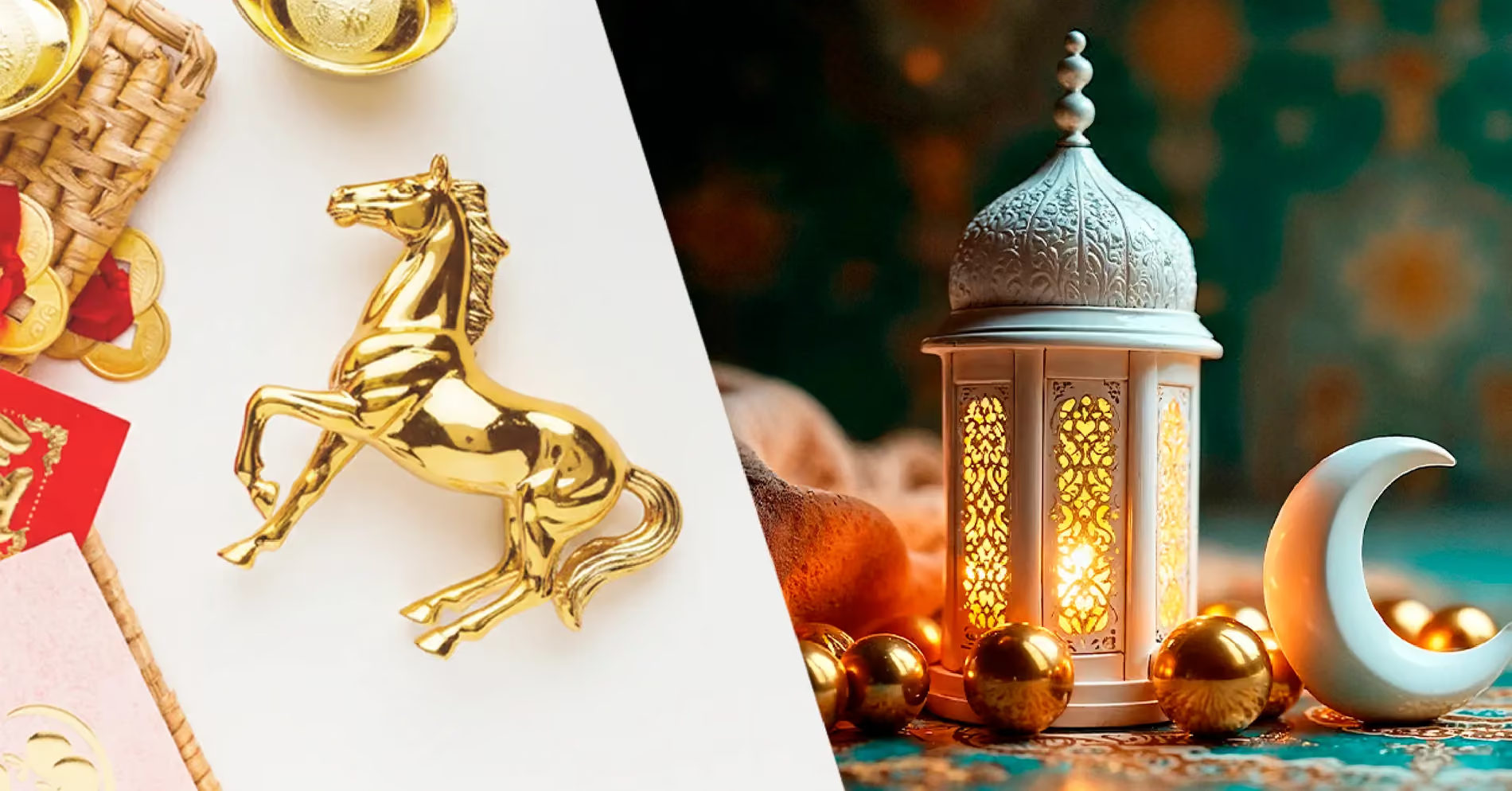
2026 presents a strong opportunity for businesses in Indonesia, as Chinese New Year and Ramadan fall close together in February. These overlapping peak seasons can drive a surge in transactions across sectors, but also require sharper strategies to avoid price wars amid more selective consumer spending.
Ramadan: Consumption Increases, But More Selective
Ramadan is always a peak consumption period, especially for food and beverages, travel (mudik), and holiday preparations, driving a surge in transactions. According to a GoodStat survey, additional Ramadan 2025 spending was mainly allocated to iftar meals (50.7%), alms (25.8%), clothing and footwear (13.5%), gifts (5.4%), and other needs.
Chinese New Year: Tradition-Based Consumption & Gifting
Chinese New Year is a peak period for tradition-driven spending, especially in retail, food, gifting, and travel. Demand rises for items like hampers, traditional foods, fashion, and festive decorations.
Chinese New Year and Ramadan Business Opportunities: These Industries Are Poised to Boom!
The overlap of Chinese New Year and Ramadan creates a mix of celebratory and practical spending. As a result, business strategies need to be tailored by industry, covering products, promotions, and transaction experience.
1. F&B & Hampers
Why is it potentially thriving?
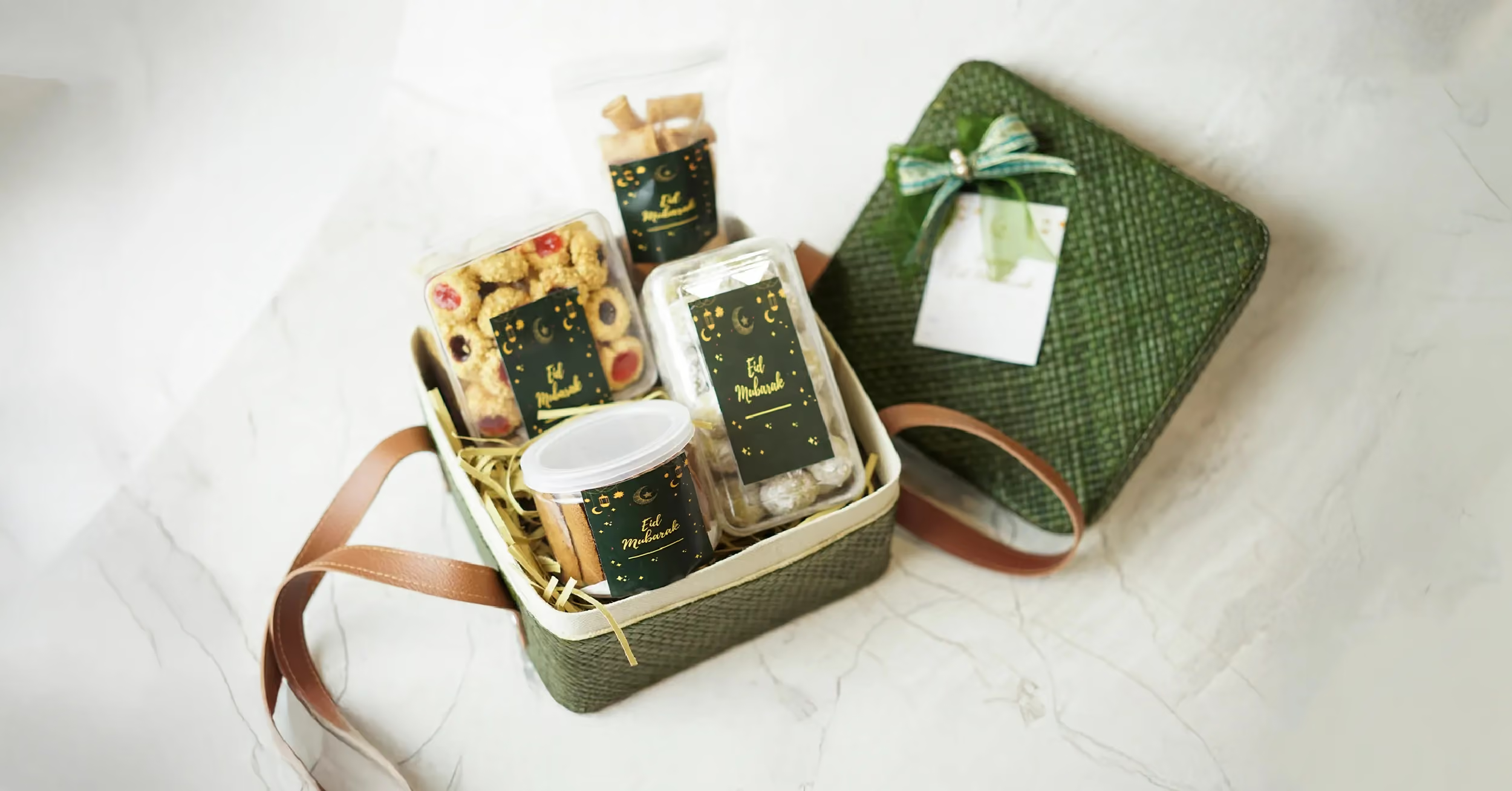
During Chinese New Year, F&B and hampers are driven by traditions of sharing and symbols of good luck. Products are bought not just for consumption, but to maintain relationships with family, colleagues, and business partners.
During Ramadan, spending shifts to more routine and functional needs, like sahur, iftar, and daily family essentials. However, social moments such as group iftar and sending Eid hampers continue to drive early transactions in this sector.
This means that F&B is experiencing two waves simultaneously:
- A gifting and symbolic wave (Chinese New Year) and
- A routine and social consumption wave (Ramadan)
Business strategy:
- Design cross-seasonal products (Chinese New Year → Ramadan → Eid) with differentiated packaging, not just products.
- Encourage pre-orders and scheduled delivery to capture planned purchases.
- Create menu bundles/hamper packages to increase transaction value.
- Optimize digital payment channels to accommodate impulse purchases and repeat orders.
Read More:
Adapting to Every Situation is Key to Lawless Burgerbar's Business Success
2. Fashion & Retail

Why is it potentially thriving?
Both Chinese New Year and Eid al-Fitr are linked to the idea of “new beginnings,” often reflected in purchases of clothing and personal items. However, the motivations behind these purchases differ.
During Chinese New Year, purchases are driven by cultural meaning and symbols of good fortune. During Ramadan and Eid al-Fitr, spending is more focused on social needs, family connections, worship, and togetherness.
Also read: Peek at the Secrets of HGL's Successful Fashion Business, a Hit in Bandung
Amidst increasingly rational consumers, fashion hasn't completely disappeared from the priority list, but has become:
- more selective,
- more functional,
- more focused on products that can be worn across occasions.
Business strategy:
- Offer collections that are relevant across celebrations (not just seasonal designs that quickly become outdated, but also timeless).
- Encourage a mix-and-match concept to give consumers a greater sense of value.
- Utilize gradual thematic campaigns (Chinese New Year → Ramadan → Eid) to maintain awareness over time.
- Ensure seamless payment integration for consumer convenience and reduce cart abandonment at checkout.
Also read: The Evolution of Indonesian Haute Couture: From Runway to Ecommerce Market
3. Travel and Hospitality

Why is it potentially thriving?
Chinese New Year and Ramadan encourage two different types of travel:
- Chinese New Year tends to trigger short getaways, family trips, or staycations.
- Ramadan and Eid al-Fitr encourage travel such as mudik (homecoming) and family vacations.
Even as price sensitivity rises, the need to travel remains. What’s changed is decision-making, consumers are more cautious, compare options more, and rely on promotions and flexibility.
Demand also builds gradually, following holiday timing and family plans, rather than peaking all at once.
Read More: Service Excellence: DOKU's Secret Behind the Challenges of the Travel Industry
Business strategy:
- Offer flexible packages (reschedule, refund, or open date).
- Develop transportation-accommodation-activity bundles to create greater value for money.
- Optimize installment or paylater schemes and alternative payment methods to lower purchase barriers.
- Strengthen early booking campaigns to secure early demand.
4. Grocery & Essentials

Why is it potentially thriving?
Grocery and basic necessities are the most stable sector amidst changes in purchasing power.
During Ramadan, consumption increases due to:
- a higher frequency of cooking and eating at home,
- the need for sahoor and iftar meals,
- preparation of stockpiles for Eid al-Fitr.
Meanwhile, during Chinese New Year, there is increased demand for festive products and home decor.
Interestingly, this sector tends to generate:
- recurring transactions,
- high volume,
- and strong customer loyalty when the shopping experience is satisfying
Business strategy
- Ensure stock availability and distribution for fast-moving products.
- Encourage repeat orders for daily needs.
- Optimize fast, "pick-up-the-consumer" payment solutions for small but frequent transactions, such as payment link or QRIS.
It's Time to Optimize the Chinese New Year and Ramadan Consumption Cycle
In 2026, Chinese New Year and Ramadan may create a connected cycle of consumption, shifting from tradition-driven, symbolic spending to more routine, social, and preparatory needs.
To succeed, businesses need more than big discounts. The key is understanding when consumers are driven by emotion and meaning, and when they become more practical and value-focused. Equally important is timing, being ready when demand rises, and delivering a fast, seamless, and secure transaction experience across channels.
This is where payment technology becomes essential. As a fintech company, DOKU helps businesses capture seasonal opportunities like Chinese New Year and Ramadan through flexible digital payment solutions, diverse payment methods, and reliable transaction systems. With a strong payment foundation, businesses can focus on growth, while seamless transactions become a competitive advantage.
Optimize transactions during the Chinese New Year × Ramadan period so that every transaction opportunity is not missed.


