



Table of Contents

Key Takeaways:
- Phishing websites not only cause financial loss to customers, but also harm businesses through a decline in trust, an increase in complaints, and the unauthorized misuse of brand identity.
- Businesses need to recognize the sign of phishing websites, including lookalike domain names, urgent requests for personal information, and customer reports regarding suspicious sites or messages.
- Prevention phishing requires both businesses and customers to play a role, including user education, domain monitoring, Multi-Factor Authentication (MFA) implementation, and the habit of verifying URLs prior to logging in or making payments.
Websites are essential assets for businesses to build credibility, strengthen branding, and support transactions. However, this digital asset can also be exploited by fraudsters to carry out phishing website attacks, a form of fraud that uses fake websites designed to resemble official websites and trick users into providing sensitive information, including usernames, passwords, payment card details, and OTP codes.
This scheme occurred in February 2026, when the National Police's Criminal Investigation Department (Bareskrim Polri) uncovered a syndicate that created fake websites resembling the official e-Tilang payment website of the Attorney General’s Office (Kejaksaan Agung). The perpetrators sent fake text messages containing malicious links, directing people to cloned payment sites to steal their personal details and card numbers. This case shows how an institution's official identity and official channels can be impersonated to make fraudulent websites appear legitimate.
For businesses, a similar scheme can harm customers while also affecting trust iin the impersonated brand. Fraudsters can distribute phishing links through various channels, including email, WhatsApp, SMS, and digital advertisements, with messages that urge users to immediately log in, update information, claim offers, or complete payments.
Why Do Businesses Become Targets of Phishing Websites?
Businesses are prime targets for phishing scams because they have a large customer base and established brand identities. These factors can be exploited to make fake websites or messages appear more convincing.
Some reasons that make businesses vulnerable to being targeted by phishing include:
- Access to Large Amounts of Funds: Business accounts generally handle larger transactions compared to personal accounts, making them attractive targets for cybercriminals.
- Valuable Customer Data: Businesses store customer sensitive data, including phone numbers, addresses, and payment details, which can be sold or misused.
- Limited Cybersecurity Awareness: Some businesses may not have a dedicated IT team or cybersecurity SOPs, making employees more vulnerable to phishing attempts
How Do Phishing Websites Work
Phishing website attacks generally take place through several stages. Perpetrators use social engineering to make victims believe that they are interacting with an official website or service.
1. Fraudsters Create a Fake Website
Fraudsters create websites with an appearance that looks very similar to official websites, including logos, colors, and layouts. In fact, the domain addresses are often made to resemble the original domain, for example, by replacing a single letter or adding specific characters.
2. Victims Are Directed to the Fake Site
Next, victims are directed to the website through various methods, such as:
- Faked emails impersonating trusted brands
- SMS or WhatsApp messages containing links
- Malicious ads on social media or search engines
- Direct messages on chat apps
Usually, these messages contain calls to action to immediately log in, claim prizes, update accounts, or complete payments.
3. Victims Submit Sensitive Data
Because the website appearance looks convincing, victims may then enter information, such as:
- Usernames and passwords
- Credit or debit card details
- OTP (One-Time Password) codes
- Personally Identifiable Information (PII)
This data is directly saved on the fraudster' server.
4. Data Exploitation & Fraud
The obtained information can be used by fraudsters to attempt to take over accounts, carry out unauthorized transactions, access other systems, or execute further fraudulent activities.
Therefore, phishing websites do not rely only on a fraudster’s ability to create fake websites. They also depend on successfully making victims trust the website and willingly provide information that should remain confidential.
Here are Signs of Phishing Websites
For businesses, identifying phishing is not simply about checking a website before using it. Teams also need to understand how fake sites can use a brand's name and what signs to look for when receiving reports or finding suspicious channels.
1. Domains That Resembles Brand Names
Fraudsters can create website addresses that, at a glance, appear to belong to a business. The differences may consist merely of additional characters, spelling alterations, or a different domain extension.
Action for Businesses: Monitor domains that resemble the brand name and ensure customers know the official website address being used.
2. Customers Are Urged to Take Immediate Action
Phishing websites typically urge victims to take immediate action, such as logging in, updating data, claiming prizes, or completing payments.
Action for Businesses: Stay alert if customers begin receiving messages in the name of the brand containing payment instructions or data requests that were never issued by the company.
3. The Brand Is Used to Request Sensitive Information
Fraudsters may feature the business logo and identity so that data requests appear official. The requested information may includepasswords, OTPs, PINs, or payment card details.
Action for Businesses: Ensure there are clear guidelines regarding what information the company never requests from customers via email, chat, or unofficial websites.
4. The Website Looks Similar, but Some Details Seem Off
Fake websites can be designed to resemble official websites, but they often still contain differences in logos, layouts, images, language, or links.
Action for Businesses: Identify and document the company's official channels so that the customer service team can assist customers in distinguishing between legitimate websites and suspicious sites.
5. Repeating Customer Complaints
One of the signs that businesses need to pay attention to actually comes from customers. If multiple customers report receiving the same links, messages, or payment requests in the name of the brand, the matter requires immediate follow-up.
Action for Businesses: Do not ignore reports that appear similar. Collect information such as URLs, screenshots, messages, and timestamps of occurrence to support the verification and reporting process.
Read More: Anti-Fraud Methods to Prevent Suspicious Transactions
The Risk of Phishing Websites for Business
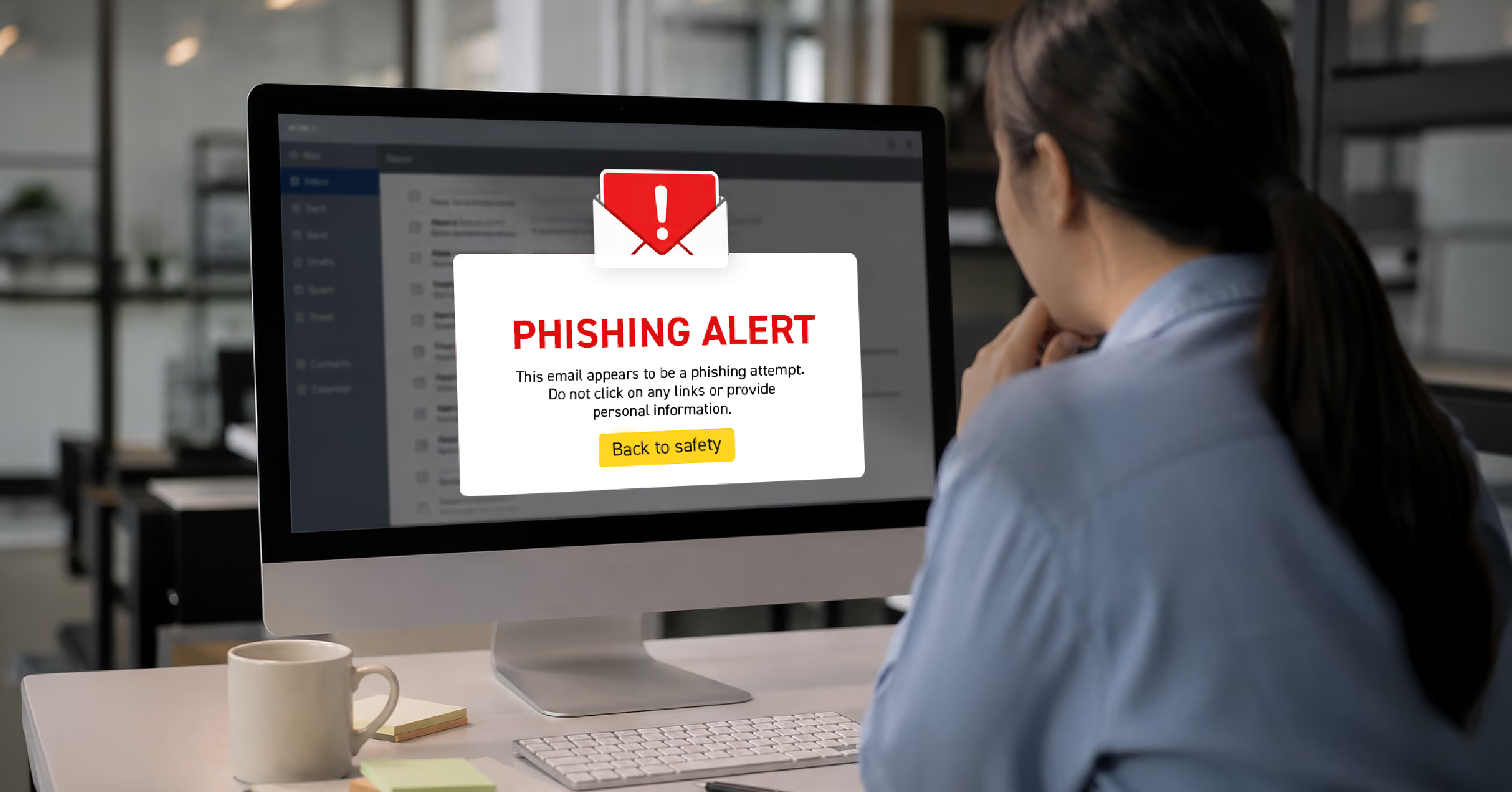
Phishing websites may target customers, but their impact can also be felt by businesses whose identities are misappropriated. Some risks businesses should be aware of include:
- Decreasing Customer Trust
When customers are deceived by a website impersonating a business, they may associate that experience with the recognized brand. If such incidents occur repeatedly, customers may become hesitant to perform transactions or provide information through the business's digital channels.
- Increasing Complaints and Disputes
Customers who become victims of phishing may contact the business to request explanations, refunds, or transaction-related assistance. The customer service team also needs to examine reports, verify suspected websites or messages, and direct customers to official channels. If phishing becomes widespread or directly impersonates the brand, the volume of reports and investigation requirements may increase, thereby adding to the business's operational burden.
- Misuse of Brand Identity
The name, logo, colors, and visual identity of a business can be misappropriated to make phishing websites look like official channels. This misuse can cause the brand to be associated with deceptive activities that were not actually committed by the business. As a result, the business risks facing negative perception, increased customer hesitation, and damage to its brand image.
How to Prevent Phishing Website Attacks
Both businesses and customers play a crucial role in reducing phishing risks.
For Businesses
Businesses can also strengthen protection through:
- Using SSL/TLS certificates on the website
- Applying multi-factor authentication (MFA) for administrator accounts.
- Monitoring fake domains that resemble the company name
- Educating customers regarding the company's official communication channels.
- Using security systems capable of detecting suspicious activity.
- Providing an official page containing security information and guides to avoiding fraud.
For Users
Several steps that can be taken include:
- Always check the URL before logging in or making a payment.
- Ensure the website uses HTTPS with a valid security certificate.
- Do not click links from suspicious emails or messages.
- Type the website address directly through the browser.
- Enable multi-factor authentication (MFA) on accounts that support the feature.
- Never share the OTP code with anyone.
Phishing websites are not a threat that can be taken lightly by businesses. With the rise of digital transactions, this risk is increasing, and the methods used are becoming more advanced. The key to protection lies in combining education, vigilance, and strong security systems. A small investment in cybersecurity training and the implementation of strict SOPs can save a business from major losses in the future.
Always remember to verify before you click!
#KalauRaguStopDulu
#GeberPK2026
#KonsumenCerdasPeKABertransaksi


