



Table of Contents

Key Takeaways:
- Chinese tourists in Indonesia are increasingly experience-driven and digitally savvy, with a strong interest in family vacations, city and island travel, culinary experiences, and cultural tourism.
- he shift to Free and Independent Traveler (FIT) makes digital readiness crucial, from a Mandarin-language digital presence, real-time online reservation systems, to easily accessible self-service services.
- Cross-border digital payments are a key business opportunity, as Chinese tourists are accustomed to using Alipay and WeChat Pay, which encourage faster transactions, spontaneous shopping, and increased merchant transaction value.
Indonesia is experiencing a strong tourism recovery, with international tourists once again driving growth, particularly from China, as one of the key post-pandemic markets. For businesses, this momentum is not only about increasing the number of visits, but also about understanding shifts in behavior, consumer preferences, and transaction habits of Chinese tourists so that revenue opportunities, service quality, and marketing strategies can be optimized more effectively
Here are The Trends & Characteristics of Chinese Tourists
From January-September 2025, Chinese tourist visits to Indonesia reached 1.02 million people, growing by 9% compared to the same period the previous year. This growth confirms that the Chinese market has once again become a one of the key drivers of Indonesia’s post-pandemic tourism recovery
According to the ITB China Travel Trends Report 2025/26 , 37% of Chinese tourists chose Southeast Asia as their primary destination, including Indonesia, Singapore, Thailand, Malaysia, and other countries in the region. This indicates that Southeast Asia remains a priority region on China's outbound travel landscape.
In terms of destinations, Chinese tourists in Indonesia are increasingly shifting towards nature tourism and iconic landscapes. Ni Made Ayu Marthini, Deputy for Marketing at the Ministry of Tourism and Creative Economy, as cited by Republika.com, stated that popular destinations for Chinese tourists include the coastal scenery of Manado inNorth Sulawesi, and the Bromo–Tengger–Semeru (BTS) area. This trend highlightsIndonesia's strong appeal in the nature tourism and landscape-based experiences segment.
Chinese Tourists' Vacation Preferences When Traveling Abroad
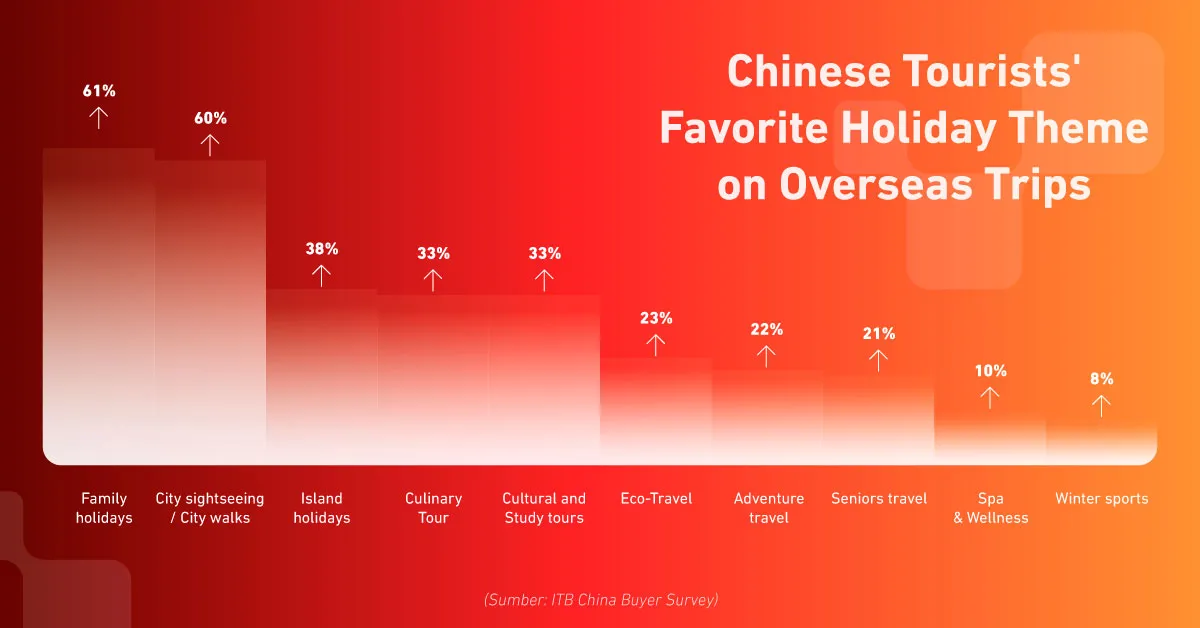
Chinese tourists' interests are shifting from sightseeing trips to experience journeys.
- 61% – Family Vacations
This indicates that Chinese tourists often travel with their families across generations. Kid-friendly destinations, family-friendly hotels, and family activities represent high-growth segments.
- 60% – City Sightseeing & City Walks
City tourism remains a top choice. Cities with strong cultural, shopping, culinary, and landmark attractions have a strong appeal for Chinese tourists.
- 38% – Island Vacations
This indicates a strong interest in beach and resort destinations. Indonesia offers opportunities in this segment through several favorite tourist destinations such as Bali, Lombok, Labuan Bajo, and other island destinations.
- 33% – Culinary and Cultural Tourism
Chinese tourists are also actively seeking local dining experiences and cultural exploration. There are significant opportunities for local restaurants, food tours, and cultural attractions as key shopping and transaction points.
These findings are also reflected in the field. The Ministry of Tourism and Creative Economy notes that during holiday periods such as New Year and Chinese New Year, Chinese tourists often choose junior suites in city hotels to photograph and share on social media, showcasing the luxury of their accommodations.
Furthermore, many tourists choose family resorts as a place to gather and enjoy time together, and are also increasingly interested in activities such as diving and golf as part of their vacation experience.
💡Opportunities for Businesses:
Experience-based products or services present strong opportunities in the tourism sector. Restaurants, tourist attractions, and local tour operators can attract Chinese tourists through unique, authentic, and shareable experiences, while also driving higher-value interactions and transactions.
The Shift from Group Tours to Independent Travel

Both data from the ITB China Travel Trends Report 2025/26 and the Ministry of Tourism and Creative Economy (Kemenparekraf) note a shift from group tours to independent travel (Free Independent Travel/FIT). According to the Ministry, before the Covid-19 pandemic, Chinese tourists typically traveled in groups and toured destinations using tour buses Each group consisted of five to six people per trip.
This contrasts with today's trend, where tourists are more willing to travel in pairs or solo. This shift is driven by advancements in technology and artificial intelligence (AI), which make it easier for tourists to communicate using various translation platforms during their travels.
The Needs of Chinese Free and Independent Traveler (FIT)

As this trend evolves, the needs of Chinese tourists are also changing, requiring stronger digital ecosystem readiness at destinations,, including:
- Mandarin-language Digital presence
Destination information and services on digital channels such as websites in Mandarin are crucial so tourists can plan their trips, understand available services, and transact with greater confidence.
- Reliable online reservation systems
Chinese tourists are now accustomed to independently booking hotels, attractions, transportation, and restaurants. The availability of fast, transparent, and real-time online reservation systems have become key factors in choosing destinations and service providers.
- Familiar digital payment methods
Supporting popular Chinese payment methods simplifies transactions and increases the opportunity for spontaneous shopping across various service points.
China’s Digital Payments: a New Opportunity for Your Business

The dominance of digital payments among Chinese tourists is strengthening. According to Statista, Alipay and WeChat Pay are used by around 9 out of 10 online payment users in China over the past 12 months, making them the most popular payment platforms in the domestic market.
This high adoption rate also shapes Chinese tourists' transaction habits when traveling abroad, where they expect payment processes to be cashless, fast, and familiar, just like in their home country.
In the tourism context, this preference encourages Chinese tourists to spend more actively, book attractions, and even make spontaneous purchasesat merchants that support Chinese digital payment methods. For businesses in Indonesia, readiness to accept Alipay, WeChat Pay, and other cross-border payment systems is becoming a crucial factor in capturing the growing digital-first spending potential of Chinese tourists.
Are There Opportunities for Businesses?
Yes, absolutely. The increasingly digital transaction behavior of Chinese tourists not only reflects a shift in habits but also presents significant opportunities for businesses in Indonesia to enhance competitiveness and capture spending potential of them more effectively. Here are some key opportunities:
- Increased Sales
Adopting familiar payment methods for Chinese tourists speeds up the transaction process, reduces friction at checkout, and encourages higher spending from travelers known for their active transactions.
- Expanding the Market & Improving Customer Experience
China-ready payments expand reach to Chinese tourists by providing a familiar, convenient transaction experience and encouraging increased spending.
Fast, secure, and familiar transactions increase tourist satisfaction, increasing the likelihood of positive reviews, repeat visits, and recommendations among fellow Chinese travelers.
Tourism Business Tips for Welcoming Chinese Tourists

As Chinese tourists shift from group tours to Free Independent Travel/FIT, their needs increasingly demand strong digital ecosystem readiness at their destinations. To fully capture this opportunity, you business need to adapt its services through the following strategic steps:
1. Strengthen Digital Presence & Multilingual Experience
Provide information about destinations, hotels, restaurants, and tourist activities on websites and digital channels in Mandarin, including menus, service guides, and payment instructions in the same language. This step helps Chinese tourists plan their trips more easily, understand services clearly, and increase comfort, satisfaction, and potential referrals during their stay in Indonesia.
2. Build Strategic Collaborations with Local Partners
Work with travel agents or tour operators to expand brand visibility in the Chinese market and reach from the early planning stage of their journey..
3. Provide a Reliable Online Reservation System
Chinese tourists are now accustomed to booking hotels, attractions, transportation, and even restaurants independently. A fast, transparent, and real-time reservation system iare critical factors in choosing a destination and service provider.
4. Expand Familiar Digital Payment Options
Supporting popular payment methods in China is key to simplifying transactions and increasing the opportunity for spontaneous purchases across various service points. Likewise, the presence of payment signage in Mandarin or QR code payments also helps build help build trust and confidence during transactions.
Digital Payments as Key to Tourism Competitiveness

Chinese tourists have once again become a strategic market for the Indonesian tourism sector, driven by increasing visitor numbers and the government’s focus on attracting travelers from this segment. Their strong spending behavior and preference for digital transactions highlight that readiness to accept cross-border payments is now an essential part of modern tourism services.
Businesses that can adapt by providing digital services, reliable reservation systems, and familiar payment methods such as QR codes from Alipay and WeChat Pay will have a competitive advantage in serving Chinese tourists more effectively.
In this context, the role of fintech payment companies like DOKU is becoming increasingly relevant, providing a broad and integrated payment ecosystem to help merchants serve international tourists more easily, securely, and efficiently. With the right service, technology, and marketing strategies, the potential of the Chinese tourist market can be harnessed sustainably.
Ready to capture opportunities from Chinese tourists? Make sure your business offers payment methods they are familiar with.


