


Table of Contents

Key Takeaways
- AI accelerates business, but also expands data protection risks. Without proper controls and governance, AI can become a new channel for unnoticed data leaks.
- Data breaches are not only caused by cyberattacks. Everyday activities such as email, file sharing, and the use of generative AI can also become vulnerable points.
- Data protection is the foundation of trust and business sustainability in the AI era. Approaches such as Zero Trust, leveraging AI for early detection, governing generative AI usage, and improving internal security awareness are key to ensuring safe AI innovation.
AI has now become a “new co-worker” in many businesses, from chatbots that respond to customers 24/7, to AI tools that generate marketing content, to systems that analyze transaction patterns and consumer behavior.
It is no surprise that globally, 94% of organizations consider AI to be the biggest driver of change in the future cybersecurity landscape. AI enables businesses to operate faster and more efficiently, while also reshaping the risk landscape, particularly when it comes to data.
One thing is certain: AI cannot function without data. The more frequently AI is used, the more data is processed and this is where many businesses begin to overlook the risks.
AI Creates Opportunities and Security Challenges

Before the AI era, data was typically stored and analyzed periodically. Today, data is continuously processed by machines to generate recommendations and decisions.
In daily business practices, this includes:
- Customer data from websites, marketplaces, and social media
- Internal teams are using AI tools to summarize reports, analyze trends, or even respond to emails.
- AI systems learn from historical data to predict future behavior.
According to the Global Cybersecurity Outlook 2026, 87% of organizations identify security gaps in AI usage as one of the fastest-growing cyber threats.
AI: Used by Businesses and Cybercriminals.
AI is not only leveraged by businesses, but also by cybercriminals.
On one hand:
- 77% of organizations already use AI for cybersecurity, particularly to detect phishing, anomalies, and suspicious behavior
- AI helps accelerate incident detection and response, which previously took much longer.
On the other hand:
- Cybercriminals use AI to create more convincing phishing attacks.
- Attacks are becoming faster, more personalized, and harder to distinguish from legitimate activity.
Data Risks Emerging Alongside AI Adoption
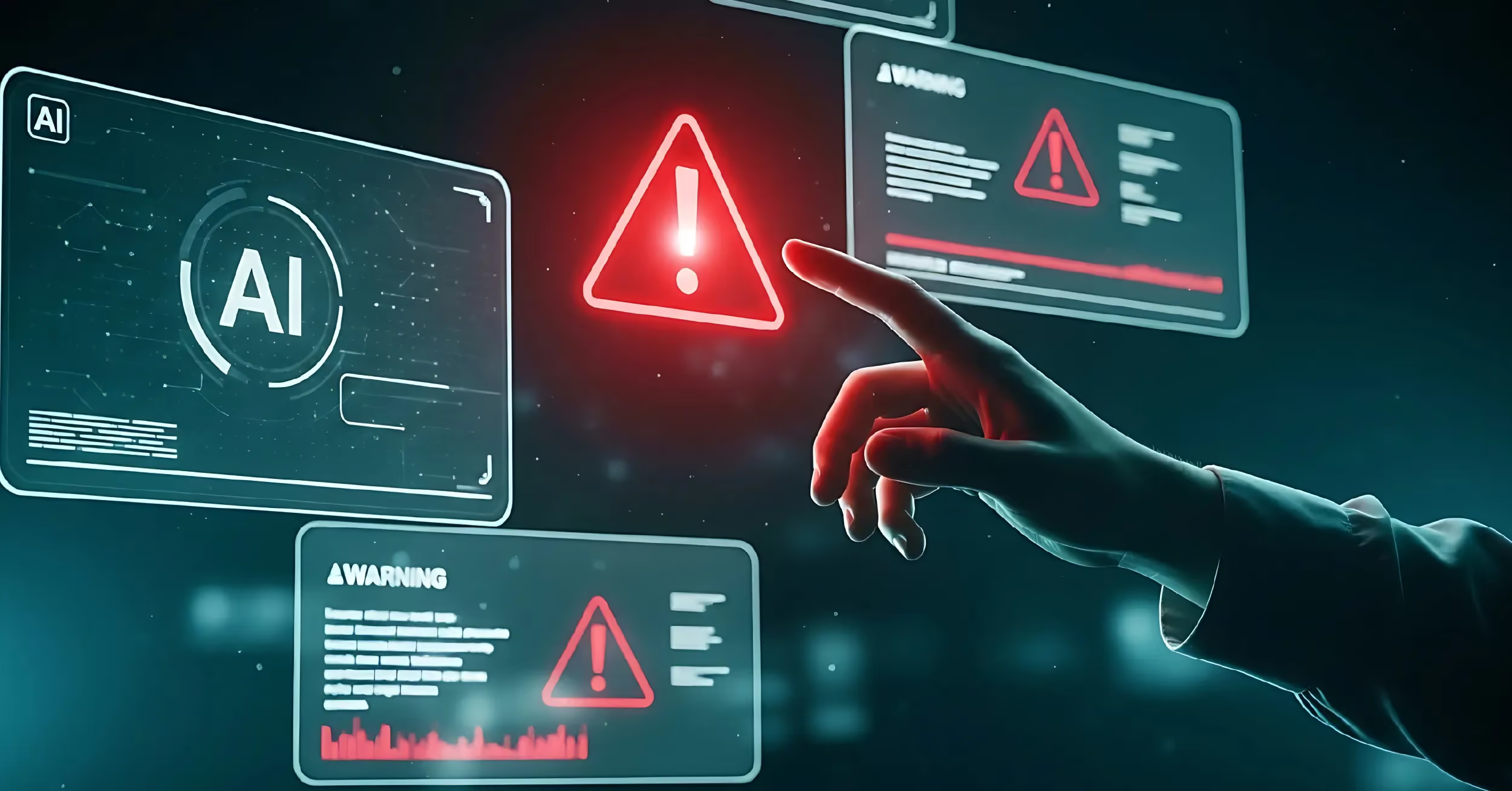
As AI becomes more embedded in business operations, risks are spreading into processes that were previously considered safe.
The Zscaler ThreatLabz Data@Risk Report 2025 highlights that data breaches no longer originate from a single vulnerability, but from multiple overlooked channels, especially amid widespread AI adoption and digital workflows.
1. Generative AI Applications as Potential Risk Points
The use of generative AI tools is increasingly common to accelerate work. However, businesses must be cautious about sensitive data being entered into AI systems such as personal identification numbers, source code, or even health and medical information. Without clear policies and controls, AI can become a potential source of data leakage.
2. Email Remains a Classic Vulnerability
Despite being a long-established technology, email continues to be one of the most common sources of data breaches. Sending unencrypted documents, incorrect recipients, or clicking phishing links remain frequent risks. Because email feels familiar, it is often perceived as safe when in fact, it can be a major entry point for cyber threats.
3. Uncontrolled File Sharing Increases Risk
File-sharing services enable seamless collaboration across teams and business partners. However, many data breaches occur due to overly permissive access settings. Sensitive files that are publicly accessible, shared externally without restrictions, or stored without additional protection pose real risks, especially when they involve customer or transaction data.
Data Protection Strategies Businesses Must Prepare

In reality, most data breaches today are not caused by sophisticated cyberattacks, but by human error, lack of visibility, and weak internal controls. Everyday activities such as file sharing, sending emails, or using generative AI, often create unnoticed vulnerabilities.
Therefore, businesses need a more proactive and adaptive approach to data protection, one that goes beyond technology alone:
1. Zero Trust as the Foundation of Data Access
The Zero Trust approach assumes that no user, device, or system is automatically trusted, even within the organization. Every access request must go through strict verification. This helps limit risk exposure, ensures only authorized parties access sensitive data, and enables context-based access control (location, device, time).
2. Leveraging AI for Early Detection and Prevention
Instead of reacting after incidents occur, AI can be used to continuously monitor user and system activity. Unusual patterns, such as large data downloads, logins from unfamiliar locations, or uploads of sensitive data to AI tools, can be detected early, enabling faster preventive action.
3. Governing Generative AI Usage
Generative AI must be managed through clear and structured policies. Businesses should:
- Limit the types of data processed by AI.
- Apply granular controls over inputs and outputs.
- Ensure sensitive data is not used in prompts.
Technologies such as Data Loss Prevention (DLP) and AI activity audits help maintain productivity without compromising security or regulatory compliance.
4. Strengthening Internal Security Awareness
Technology is only part of the solution. Human factors remain the leading cause of data breaches. Regular training, phishing simulations, and secure work practices are essential to building a culture that prioritizes data protection.
What Happens If Data Protection Is Ignored?
- Deterioration of customer trust, especially for digital-based businesses
- Financial and operational losses, from system recovery to missed business opportunities
For businesses, trust is not just an added value, it is the foundation of long-term customer relationships.
Responsible AI Starts with Data Protection
AI will continue to evolve and become more deeply integrated into business processes. The challenge is no longer whether to adopt AI, but how to use it safely and responsibly.
Personal data protection is key to ensuring that the efficiency enabled by AI does not turn into a risk.
The momentum of World Privacy Day (January 28) serves as a reminder that privacy and data protection are not just technical issues or regulatory requirements, they are long-term commitments. For businesses, this is the right moment to reassess how data is managed, used, and protected to ensure AI adoption remains intelligent, secure, and trustworthy.
In an increasingly complex digital ecosystem, achieving this requires the right technology partner, one that not only drives efficiency but also prioritizes security and trust.
In this context, DOKU helps businesses deliver secure, compliant, and integrated digital payment solutions aligned with evolving technologies, including AI. With a strong data protection foundation, AI adoption can become smarter, safer, and more sustainable for both businesses and customers.


